Order by 12pm AEDT, Monday to Friday, for same-day shipping!
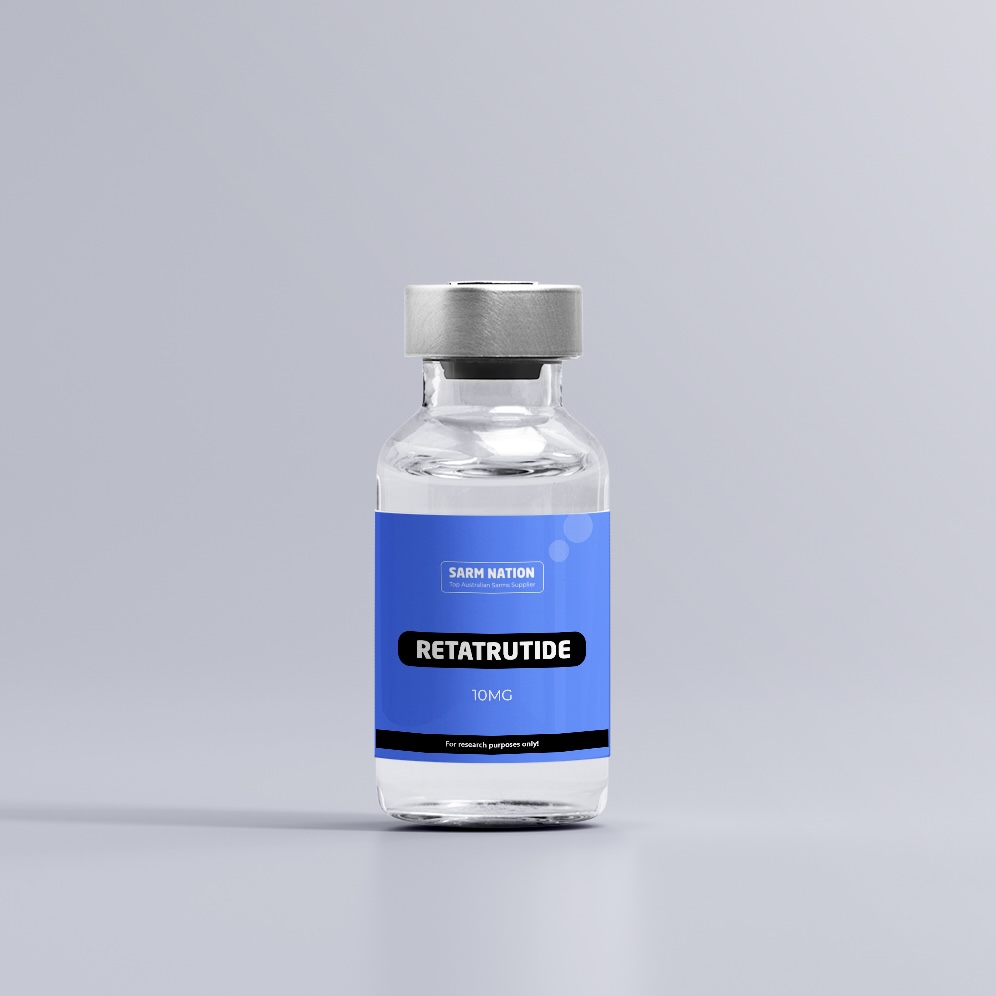
Retatrutide 10MG

$300.00

28 in stock

By Buying 

3 Bottles

You can get 10% off

By Buying 

6 Bottles

You can get 15% off

By Buying 

9 Bottles

You can get 20% off

To get a discount, simply add products to the cart and continue to the checkout page, and the discount will automatically be applied.

Retatrutide: Triple Agonist Peptide for Metabolic and Obesity Research

Retatrutide is a long-acting synthetic peptide currently under advanced clinical investigation for the treatment of obesity and metabolic disorders. It is uniquely characterised as a triple receptor agonist, simultaneously targeting glucagon-like peptide-1 (GLP-1), glucose-dependent insulinotropic polypeptide (GIP), and the glucagon receptor. This multi-pathway activity distinguishes Retatrutide from earlier incretin-based compounds that act on one or two receptors only. Retatrutide is being studied for its effects on body weight regulation, insulin sensitivity, lipid metabolism, and broader cardiometabolic risk markers. By integrating appetite regulation with pathways intended to increase energy utilisation, Retatrutide represents a next-generation approach to metabolic research currently being evaluated across Phase 2 and ongoing Phase 3 clinical programmes.

Product Summary Table

Peptide Name Retatrutide
Peptide Class Triple receptor agonist (GLP-1 / GIP / Glucagon)
Target Receptors GLP-1, GIP, Glucagon
Mechanism of Action Integrated incretin and glucagon receptor signalling
Research Vial Format 10 mg
Form Freeze-dried (lyophilised) synthetic peptide
Country of Origin Australia
Storage Lyophilised: store cold and protected from light; Reconstituted: 2–8°C (general laboratory handling guidance)
Clinical Status Phase 2 completed, Phase 3 ongoing

Research Findings & Clinical Data

Retatrutide has been evaluated in controlled clinical research settings for its combined hormonal effects on metabolism, with dose-dependent outcomes reported in Phase 2 obesity studies.
  • Significant reductions in body weight: Phase 2 data reported mean weight reductions of up to 24.2% at 48 weeks at higher clinical doses.
  • Improved glycaemic markers: Consistent with incretin-based mechanisms, studies report improvements in glucose-related measures.
  • Favourable lipid changes: Reductions in non-HDL cholesterol have been reported in Phase 2 analyses.
  • Blood pressure improvements: Cardiometabolic risk markers such as blood pressure showed improvement in reported findings.

Benefits of Retatrutide

  • Triple Pathway Metabolic Regulation integrating appetite and energy utilisation pathways.
  • Strong Weight Reduction Outcomes demonstrated in Phase 2 obesity research.
  • Broad Cardiometabolic Impact across multiple metabolic risk markers.
  • Next-Generation Peptide Design reflecting advances in multi-receptor targeting.
  • Extensive Clinical Evaluation with ongoing late-stage trials.

Studies and Additional Info

  • Phase 2 clinical trial data examining body weight reduction at 48 weeks
  • Comparative context versus GLP-1 and dual agonist therapies
  • Research into glucagon receptor contribution to energy balance
  • Cardiometabolic endpoint analyses in obesity research
Disclaimer: Retatrutide is supplied strictly for laboratory research purposes. It is not intended for human consumption or therapeutic use.

Frequently Asked Questions

What is Retatrutide studied for?

Retatrutide is studied for obesity, metabolic disease, and cardiometabolic risk through its combined GLP-1, GIP, and glucagon receptor activity.

What does the 10 mg vial format represent?

The 10 mg format indicates the total amount of retatrutide contained in the vial and does not define clinical dosing, efficacy, or administration protocols.

How does Retatrutide differ from Semaglutide or Tirzepatide?

Semaglutide targets GLP-1 only, Tirzepatide targets GLP-1 and GIP, while Retatrutide uniquely activates all three receptors, including glucagon.

Why is glucagon receptor activation important?

Glucagon receptor signalling is intended to complement appetite-related pathways by increasing energy utilisation and fat oxidation mechanisms.

Is Retatrutide approved for human use?

No. Retatrutide remains under clinical investigation and is not approved for general human use.

Retatrutide: Triple Agonist Peptide for Metabolic and Obesity Research

Retatrutide is a long-acting synthetic peptide currently under advanced clinical investigation for the treatment of obesity and metabolic disorders. It is uniquely characterised as a triple receptor agonist, simultaneously targeting glucagon-like peptide-1 (GLP-1), glucose-dependent insulinotropic polypeptide (GIP), and the glucagon receptor. This multi-pathway activity distinguishes Retatrutide from earlier incretin-based compounds that act on one or two receptors only. Retatrutide is being studied for its effects on body weight regulation, insulin sensitivity, lipid metabolism, and broader cardiometabolic risk markers. By integrating appetite regulation with pathways intended to increase energy utilisation, Retatrutide represents a next-generation approach to metabolic research currently being evaluated across Phase 2 and ongoing Phase 3 clinical programmes.

Product Summary Table

Peptide Name Retatrutide
Peptide Class Triple receptor agonist (GLP-1 / GIP / Glucagon)
Target Receptors GLP-1, GIP, Glucagon
Mechanism of Action Integrated incretin and glucagon receptor signalling
Research Vial Format 10 mg
Form Freeze-dried (lyophilised) synthetic peptide
Country of Origin Australia
Storage Lyophilised: store cold and protected from light; Reconstituted: 2–8°C (general laboratory handling guidance)
Clinical Status Phase 2 completed, Phase 3 ongoing

Research Findings & Clinical Data

Retatrutide has been evaluated in controlled clinical research settings for its combined hormonal effects on metabolism, with dose-dependent outcomes reported in Phase 2 obesity studies.
  • Significant reductions in body weight: Phase 2 data reported mean weight reductions of up to 24.2% at 48 weeks at higher clinical doses.
  • Improved glycaemic markers: Consistent with incretin-based mechanisms, studies report improvements in glucose-related measures.
  • Favourable lipid changes: Reductions in non-HDL cholesterol have been reported in Phase 2 analyses.
  • Blood pressure improvements: Cardiometabolic risk markers such as blood pressure showed improvement in reported findings.

Benefits of Retatrutide

  • Triple Pathway Metabolic Regulation integrating appetite and energy utilisation pathways.
  • Strong Weight Reduction Outcomes demonstrated in Phase 2 obesity research.
  • Broad Cardiometabolic Impact across multiple metabolic risk markers.
  • Next-Generation Peptide Design reflecting advances in multi-receptor targeting.
  • Extensive Clinical Evaluation with ongoing late-stage trials.

Studies and Additional Info

  • Phase 2 clinical trial data examining body weight reduction at 48 weeks
  • Comparative context versus GLP-1 and dual agonist therapies
  • Research into glucagon receptor contribution to energy balance
  • Cardiometabolic endpoint analyses in obesity research
Disclaimer: Retatrutide is supplied strictly for laboratory research purposes. It is not intended for human consumption or therapeutic use.

Frequently Asked Questions

What is Retatrutide studied for?

Retatrutide is studied for obesity, metabolic disease, and cardiometabolic risk through its combined GLP-1, GIP, and glucagon receptor activity.

What does the 10 mg vial format represent?

The 10 mg format indicates the total amount of retatrutide contained in the vial and does not define clinical dosing, efficacy, or administration protocols.

How does Retatrutide differ from Semaglutide or Tirzepatide?

Semaglutide targets GLP-1 only, Tirzepatide targets GLP-1 and GIP, while Retatrutide uniquely activates all three receptors, including glucagon.

Why is glucagon receptor activation important?

Glucagon receptor signalling is intended to complement appetite-related pathways by increasing energy utilisation and fat oxidation mechanisms.

Is Retatrutide approved for human use?

No. Retatrutide remains under clinical investigation and is not approved for general human use.

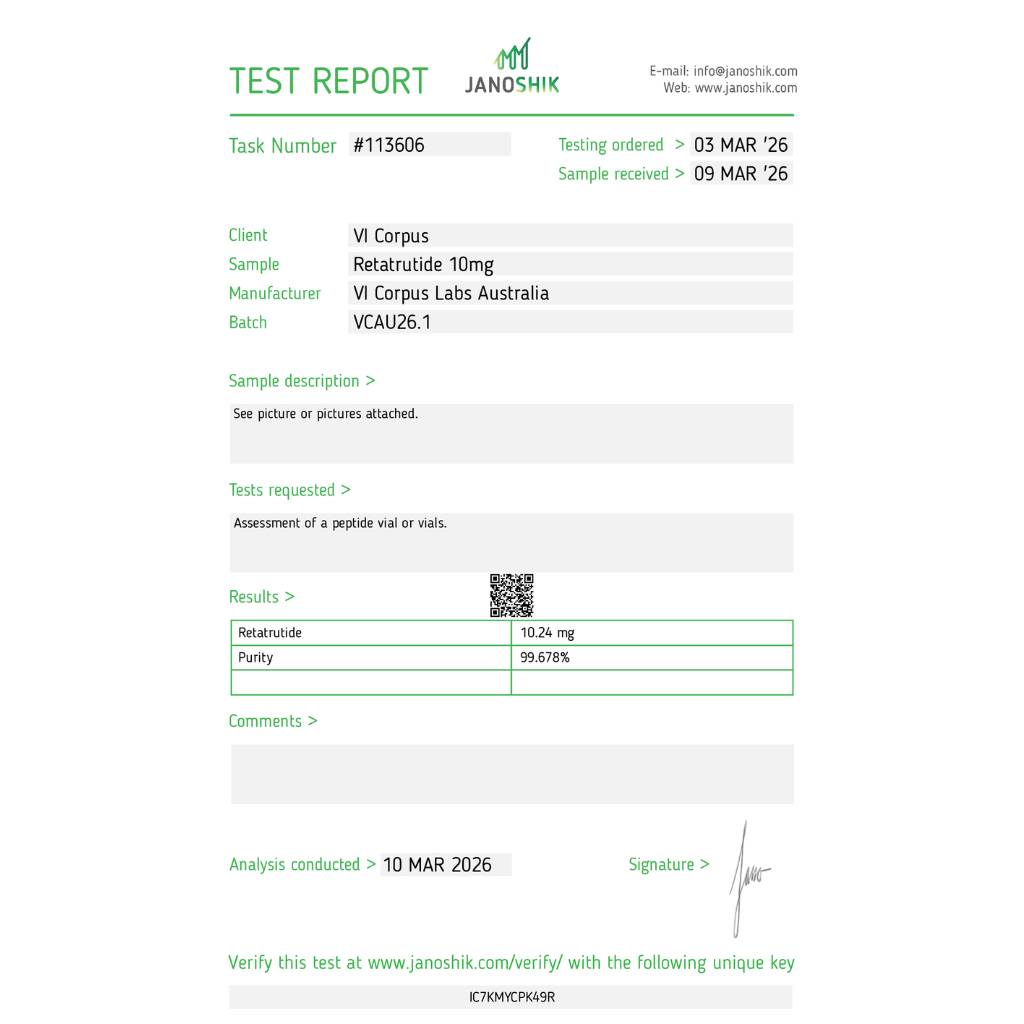
[contact-form-7 id=”4c79b99″ title=”SARMS Certificate”]

Description

Retatrutide: Triple Agonist Peptide for Metabolic and Obesity Research

Retatrutide is a long-acting synthetic peptide currently under advanced clinical investigation for the treatment of obesity and metabolic disorders. It is uniquely characterised as a triple receptor agonist, simultaneously targeting glucagon-like peptide-1 (GLP-1), glucose-dependent insulinotropic polypeptide (GIP), and the glucagon receptor. This multi-pathway activity distinguishes Retatrutide from earlier incretin-based compounds that act on one or two receptors only.

Retatrutide is being studied for its effects on body weight regulation, insulin sensitivity, lipid metabolism, and broader cardiometabolic risk markers. By integrating appetite regulation with pathways intended to increase energy utilisation, Retatrutide represents a next-generation approach to metabolic research currently being evaluated across Phase 2 and ongoing Phase 3 clinical programmes.

Product Summary Table

Peptide Name Retatrutide
Peptide Class Triple receptor agonist (GLP-1 / GIP / Glucagon)
Target Receptors GLP-1, GIP, Glucagon
Mechanism of Action Integrated incretin and glucagon receptor signalling
Research Vial Format 10 mg
Form Freeze-dried (lyophilised) synthetic peptide
Country of Origin Australia
Storage Lyophilised: store cold and protected from light; Reconstituted: 2–8°C (general laboratory handling guidance)
Clinical Status Phase 2 completed, Phase 3 ongoing

Research Findings & Clinical Data

Retatrutide has been evaluated in controlled clinical research settings for its combined hormonal effects on metabolism, with dose-dependent outcomes reported in Phase 2 obesity studies.

  • Significant reductions in body weight: Phase 2 data reported mean weight reductions of up to 24.2% at 48 weeks at higher clinical doses.
  • Improved glycaemic markers: Consistent with incretin-based mechanisms, studies report improvements in glucose-related measures.
  • Favourable lipid changes: Reductions in non-HDL cholesterol have been reported in Phase 2 analyses.
  • Blood pressure improvements: Cardiometabolic risk markers such as blood pressure showed improvement in reported findings.

Benefits of Retatrutide

  • Triple Pathway Metabolic Regulation integrating appetite and energy utilisation pathways.
  • Strong Weight Reduction Outcomes demonstrated in Phase 2 obesity research.
  • Broad Cardiometabolic Impact across multiple metabolic risk markers.
  • Next-Generation Peptide Design reflecting advances in multi-receptor targeting.
  • Extensive Clinical Evaluation with ongoing late-stage trials.

Studies and Additional Info

  • Phase 2 clinical trial data examining body weight reduction at 48 weeks
  • Comparative context versus GLP-1 and dual agonist therapies
  • Research into glucagon receptor contribution to energy balance
  • Cardiometabolic endpoint analyses in obesity research

Disclaimer: Retatrutide is supplied strictly for laboratory research purposes. It is not intended for human consumption or therapeutic use.

Frequently Asked Questions

What is Retatrutide studied for?

Retatrutide is studied for obesity, metabolic disease, and cardiometabolic risk through its combined GLP-1, GIP, and glucagon receptor activity.

What does the 10 mg vial format represent?

The 10 mg format indicates the total amount of retatrutide contained in the vial and does not define clinical dosing, efficacy, or administration protocols.

How does Retatrutide differ from Semaglutide or Tirzepatide?

Semaglutide targets GLP-1 only, Tirzepatide targets GLP-1 and GIP, while Retatrutide uniquely activates all three receptors, including glucagon.

Why is glucagon receptor activation important?

Glucagon receptor signalling is intended to complement appetite-related pathways by increasing energy utilisation and fat oxidation mechanisms.

Is Retatrutide approved for human use?

No. Retatrutide remains under clinical investigation and is not approved for general human use.

Reviews

There are no reviews yet.

Be the first to review “Retatrutide 10MG”

Your email address will not be published. Required fields are marked *