Order by 12pm AEDT, Monday to Friday, for same-day shipping!

MOTS-c

$130.00

104 in stock (can be backordered)

By Buying 

3 Bottles

You can get 10% off

By Buying 

6 Bottles

You can get 15% off

By Buying 

9 Bottles

You can get 20% off

To get a discount, simply add products to the cart and continue to the checkout page, and the discount will automatically be applied.

MOTS-c Peptide: Mitochondrial-Derived Peptide for Metabolic and Cellular Stress Research

MOTS-c is a mitochondrial-derived peptide (MDP) encoded by mitochondrial DNA and conserved across mammalian species. Unlike nuclear-encoded peptides, MOTS-c originates from the mitochondrial genome and functions as a signalling molecule involved in metabolic homeostasis, cellular stress response, and energy regulation. Discovered in 2015, MOTS-c has become a significant focus of research into mitochondrial communication, insulin sensitivity, metabolic resilience, and age-related cellular decline. Under conditions of metabolic or oxidative stress, MOTS-c has been shown to translocate to the nucleus, where it influences gene expression related to adaptive stress responses. Research interest in MOTS-c centres on its role in glucose metabolism, AMPK activation, and protection against metabolic dysfunction. Due to its mitochondrial origin and systemic signalling properties, MOTS-c is studied as a key mediator of the mitochondria–nucleus communication axis.

Product Summary Table

Peptide Name MOTS-c
Peptide Class Mitochondrial-derived peptide (MDP)
Amino Acid Length 16 amino acids
Molecular Weight ~2.1 kDa
Primary Biological Pathways AMPK signalling, metabolic stress response
Form Lyophilised synthetic peptide (must be reconstituted)
Research Vial Format 10 mg
Country of Origin Australia
Storage Lyophilised: store cold and protected from light; Reconstituted: 2–8°C
Standard Research Grade Purity ≥98 percent

In Vivo Research Findings

MOTS-c has been evaluated in cellular and animal research models examining metabolic stress, insulin sensitivity, and mitochondrial signalling.
  • Activation of AMPK pathways associated with improved metabolic regulation.
  • Improved glucose utilisation observed in insulin resistance models.
  • Protection against metabolic stress during nutrient or oxidative challenges.
  • Nuclear translocation under stress conditions influencing adaptive gene expression.
  • Association with metabolic resilience in ageing and obesity research models.

Research Applications of MOTS-c

  • Mitochondrial Biology Research involving mitochondria-to-nucleus signalling.
  • Metabolic Disorder Studies focused on insulin sensitivity and glucose regulation.
  • Ageing Research examining mitochondrial decline and cellular resilience.
  • Cellular Stress Response Investigation via AMPK and adaptive pathways.
  • Energy Homeostasis Studies across muscle and metabolic tissues.

Studies and Additional Info

  • Original discovery research on mitochondrial-derived peptides (MDPs)
  • Studies examining MOTS-c and AMPK activation
  • Metabolic research involving insulin resistance models
  • Age-related mitochondrial function investigations
  • Research into mitochondrial–nuclear communication pathways
Disclaimer: MOTS-c 10mg is supplied strictly for laboratory research purposes. It is not intended for human consumption or therapeutic use.

Frequently Asked Questions

What is MOTS-c studied for?

MOTS-c is studied for its role in mitochondrial signalling, metabolic regulation, insulin sensitivity, and cellular stress adaptation.

Is MOTS-c a hormone?

No. MOTS-c is a mitochondrial-derived peptide that functions as a signalling molecule rather than a classical hormone.

Why is MOTS-c important in ageing research?

MOTS-c levels and signalling have been associated with metabolic resilience and mitochondrial function, both of which decline with age.

Does MOTS-c affect gene expression?

Under metabolic stress, MOTS-c has been shown to translocate to the nucleus and influence adaptive gene expression pathways.

Is MOTS-c approved for human use?

No. MOTS-c is supplied strictly for laboratory research purposes and is not approved for human consumption.

MOTS-c Peptide: Mitochondrial-Derived Peptide for Metabolic and Cellular Stress Research

MOTS-c is a mitochondrial-derived peptide (MDP) encoded by mitochondrial DNA and conserved across mammalian species. Unlike nuclear-encoded peptides, MOTS-c originates from the mitochondrial genome and functions as a signalling molecule involved in metabolic homeostasis, cellular stress response, and energy regulation. Discovered in 2015, MOTS-c has become a significant focus of research into mitochondrial communication, insulin sensitivity, metabolic resilience, and age-related cellular decline. Under conditions of metabolic or oxidative stress, MOTS-c has been shown to translocate to the nucleus, where it influences gene expression related to adaptive stress responses. Research interest in MOTS-c centres on its role in glucose metabolism, AMPK activation, and protection against metabolic dysfunction. Due to its mitochondrial origin and systemic signalling properties, MOTS-c is studied as a key mediator of the mitochondria–nucleus communication axis.

Product Summary Table

Peptide Name MOTS-c
Peptide Class Mitochondrial-derived peptide (MDP)
Amino Acid Length 16 amino acids
Molecular Weight ~2.1 kDa
Primary Biological Pathways AMPK signalling, metabolic stress response
Form Lyophilised synthetic peptide (must be reconstituted)
Research Vial Format 10 mg
Country of Origin Australia
Storage Lyophilised: store cold and protected from light; Reconstituted: 2–8°C
Standard Research Grade Purity ≥98 percent

In Vivo Research Findings

MOTS-c has been evaluated in cellular and animal research models examining metabolic stress, insulin sensitivity, and mitochondrial signalling.
  • Activation of AMPK pathways associated with improved metabolic regulation.
  • Improved glucose utilisation observed in insulin resistance models.
  • Protection against metabolic stress during nutrient or oxidative challenges.
  • Nuclear translocation under stress conditions influencing adaptive gene expression.
  • Association with metabolic resilience in ageing and obesity research models.

Research Applications of MOTS-c

  • Mitochondrial Biology Research involving mitochondria-to-nucleus signalling.
  • Metabolic Disorder Studies focused on insulin sensitivity and glucose regulation.
  • Ageing Research examining mitochondrial decline and cellular resilience.
  • Cellular Stress Response Investigation via AMPK and adaptive pathways.
  • Energy Homeostasis Studies across muscle and metabolic tissues.

Studies and Additional Info

  • Original discovery research on mitochondrial-derived peptides (MDPs)
  • Studies examining MOTS-c and AMPK activation
  • Metabolic research involving insulin resistance models
  • Age-related mitochondrial function investigations
  • Research into mitochondrial–nuclear communication pathways
Disclaimer: MOTS-c 10mg is supplied strictly for laboratory research purposes. It is not intended for human consumption or therapeutic use.

Frequently Asked Questions

What is MOTS-c studied for?

MOTS-c is studied for its role in mitochondrial signalling, metabolic regulation, insulin sensitivity, and cellular stress adaptation.

Is MOTS-c a hormone?

No. MOTS-c is a mitochondrial-derived peptide that functions as a signalling molecule rather than a classical hormone.

Why is MOTS-c important in ageing research?

MOTS-c levels and signalling have been associated with metabolic resilience and mitochondrial function, both of which decline with age.

Does MOTS-c affect gene expression?

Under metabolic stress, MOTS-c has been shown to translocate to the nucleus and influence adaptive gene expression pathways.

Is MOTS-c approved for human use?

No. MOTS-c is supplied strictly for laboratory research purposes and is not approved for human consumption.

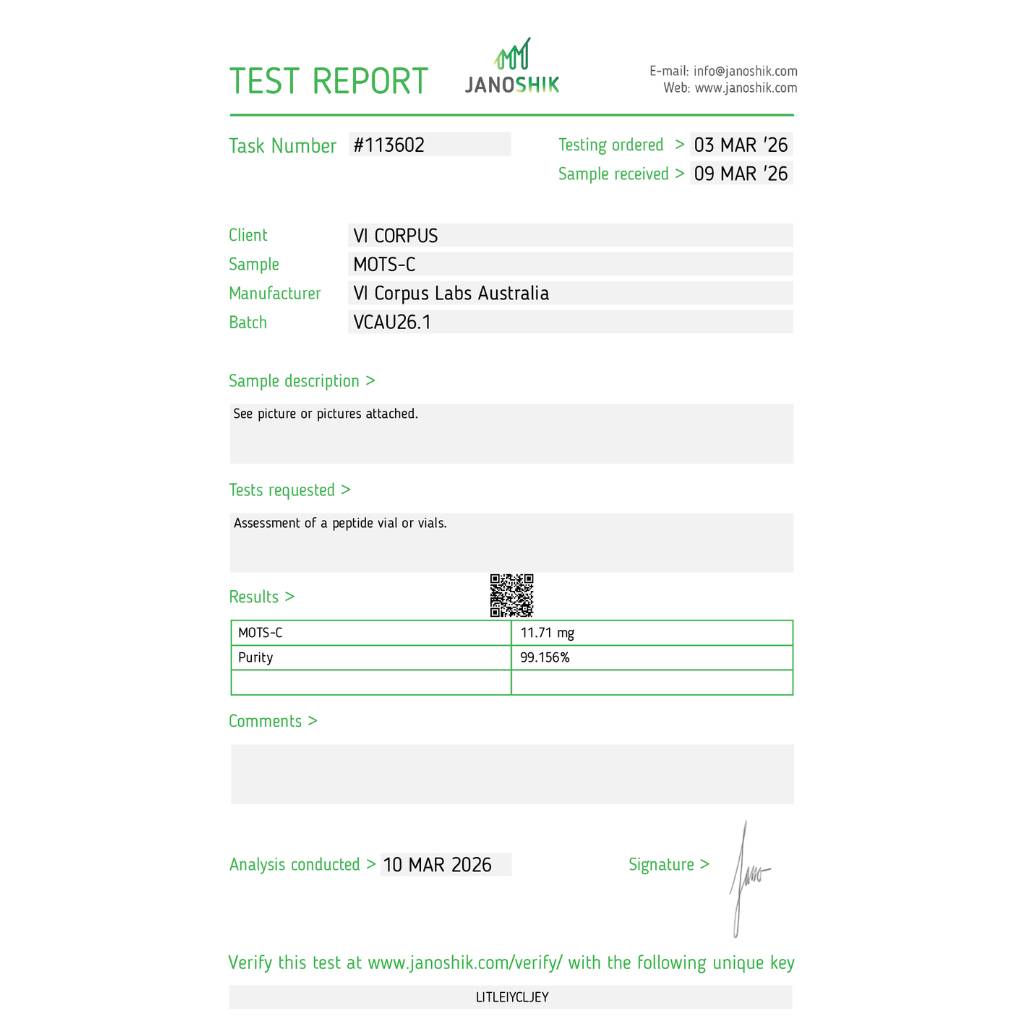
[contact-form-7 id=”4c79b99″ title=”SARMS Certificate”]

Description

MOTS-c Peptide: Mitochondrial-Derived Peptide for Metabolic and Cellular Stress Research

MOTS-c is a mitochondrial-derived peptide (MDP) encoded by mitochondrial DNA and conserved across mammalian species. Unlike nuclear-encoded peptides, MOTS-c originates from the mitochondrial genome and functions as a signalling molecule involved in metabolic homeostasis, cellular stress response, and energy regulation. Discovered in 2015, MOTS-c has become a significant focus of research into mitochondrial communication, insulin sensitivity, metabolic resilience, and age-related cellular decline. Under conditions of metabolic or oxidative stress, MOTS-c has been shown to translocate to the nucleus, where it influences gene expression related to adaptive stress responses.

Research interest in MOTS-c centres on its role in glucose metabolism, AMPK activation, and protection against metabolic dysfunction. Due to its mitochondrial origin and systemic signalling properties, MOTS-c is studied as a key mediator of the mitochondria–nucleus communication axis.

Product Summary Table

Peptide Name MOTS-c
Peptide Class Mitochondrial-derived peptide (MDP)
Amino Acid Length 16 amino acids
Molecular Weight ~2.1 kDa
Primary Biological Pathways AMPK signalling, metabolic stress response
Form Lyophilised synthetic peptide (must be reconstituted)
Research Vial Format 10 mg
Country of Origin Australia
Storage Lyophilised: store cold and protected from light; Reconstituted: 2–8°C
Standard Research Grade Purity ≥98 percent

In Vivo Research Findings

MOTS-c has been evaluated in cellular and animal research models examining metabolic stress, insulin sensitivity, and mitochondrial signalling.

  • Activation of AMPK pathways associated with improved metabolic regulation.
  • Improved glucose utilisation observed in insulin resistance models.
  • Protection against metabolic stress during nutrient or oxidative challenges.
  • Nuclear translocation under stress conditions influencing adaptive gene expression.
  • Association with metabolic resilience in ageing and obesity research models.

Research Applications of MOTS-c

  • Mitochondrial Biology Research involving mitochondria-to-nucleus signalling.
  • Metabolic Disorder Studies focused on insulin sensitivity and glucose regulation.
  • Ageing Research examining mitochondrial decline and cellular resilience.
  • Cellular Stress Response Investigation via AMPK and adaptive pathways.
  • Energy Homeostasis Studies across muscle and metabolic tissues.

Studies and Additional Info

  • Original discovery research on mitochondrial-derived peptides (MDPs)
  • Studies examining MOTS-c and AMPK activation
  • Metabolic research involving insulin resistance models
  • Age-related mitochondrial function investigations
  • Research into mitochondrial–nuclear communication pathways

Disclaimer: MOTS-c 10mg is supplied strictly for laboratory research purposes. It is not intended for human consumption or therapeutic use.

Frequently Asked Questions

What is MOTS-c studied for?

MOTS-c is studied for its role in mitochondrial signalling, metabolic regulation, insulin sensitivity, and cellular stress adaptation.

Is MOTS-c a hormone?

No. MOTS-c is a mitochondrial-derived peptide that functions as a signalling molecule rather than a classical hormone.

Why is MOTS-c important in ageing research?

MOTS-c levels and signalling have been associated with metabolic resilience and mitochondrial function, both of which decline with age.

Does MOTS-c affect gene expression?

Under metabolic stress, MOTS-c has been shown to translocate to the nucleus and influence adaptive gene expression pathways.

Is MOTS-c approved for human use?

No. MOTS-c is supplied strictly for laboratory research purposes and is not approved for human consumption.

Reviews

There are no reviews yet.

Be the first to review “MOTS-c”

Your email address will not be published. Required fields are marked *