Order by 12pm AEDT, Monday to Friday, for same-day shipping!

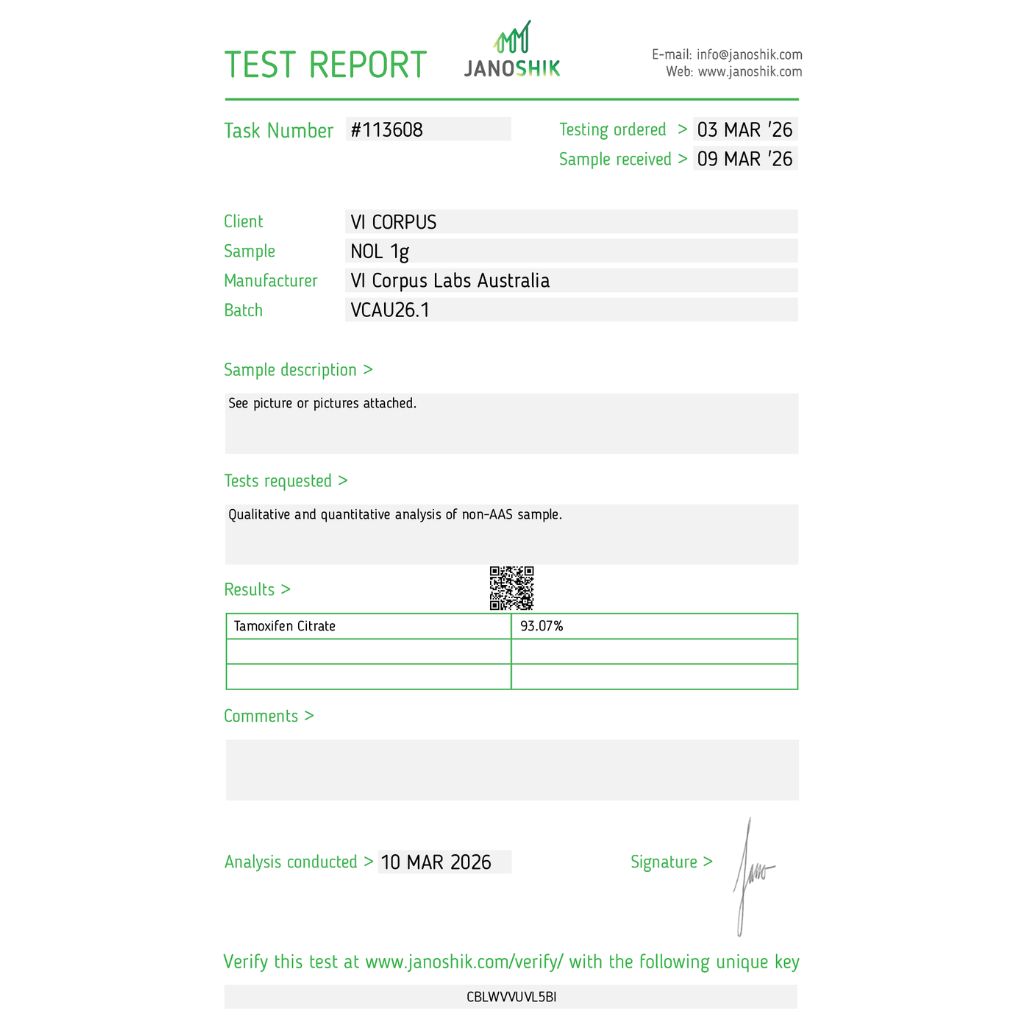
Nolvadex – Tamoxifen

$145.00

199 in stock

By Buying 

3 Bottles

You can get 10% off

By Buying 

6 Bottles

You can get 15% off

By Buying 

9 Bottles

You can get 20% off

To get a discount, simply add products to the cart and continue to the checkout page, and the discount will automatically be applied.

Tamoxifen (Nolvadex): Selective Estrogen Receptor Modulator for Endocrine and PCT Research

Tamoxifen, commonly known by the trade name Nolvadex, is a synthetic selective estrogen receptor modulator (SERM) extensively studied for its ability to modulate estrogen receptor activity in a tissue-specific manner. Rather than reducing circulating estrogen levels, tamoxifen functions by antagonising estrogen receptors in target tissues, particularly within the hypothalamus and pituitary gland. In endocrine and post-suppression research models, tamoxifen is investigated for its role in restoring hypothalamic–pituitary–gonadal (HPG) axis signalling following androgen or SARM-induced suppression. By blocking estrogen’s negative feedback at the hypothalamus, tamoxifen promotes increased secretion of gonadotropin-releasing hormone (GnRH), which in turn stimulates luteinizing hormone (LH) and follicle-stimulating hormone (FSH) release. This cascade supports endogenous testosterone production.

Product Summary Table

Compound Name Tamoxifen (Nolvadex)
Compound Class Selective estrogen receptor modulator (SERM)
Primary Target Estrogen receptor (ERα and ERβ)
Mechanism of Action Estrogen receptor antagonism at hypothalamic and pituitary sites
Biological Focus HPG axis recovery and endogenous testosterone signalling
Form Liquid oral research formulation
Concentration 20mg per ml
Country of Origin Australia
Standard Research Grade

In Vivo Research Findings

Tamoxifen has been extensively evaluated in clinical and experimental endocrine research.
  • Increased GnRH secretion through estrogen receptor antagonism in the hypothalamus.
  • Elevation of luteinizing hormone (LH) and follicle-stimulating hormone (FSH).
  • Restoration of endogenous testosterone production following hormonal suppression.
  • Selective estrogen antagonism without complete estrogen depletion.
  • Preservation of estrogen-dependent tissue function outside of target endocrine sites.

Research Applications of Tamoxifen

  • Post-Cycle Therapy (PCT) Research.
  • HPG Axis Recovery Studies.
  • Estrogen Receptor Signalling Research.
  • Comparative SERM Research versus clomiphene citrate.
  • Endocrine Feedback Loop Investigation.

Clomiphene vs Tamoxifen in Research Models

Both tamoxifen and clomiphene citrate are SERMs that increase gonadotropin release through estrogen receptor modulation. However, they differ in receptor affinity and tissue selectivity.
  • Clomiphene exhibits stronger pituitary stimulation in some models.
  • Tamoxifen is often associated with more selective estrogen antagonism.
  • Both compounds are studied for complementary roles in endocrine recovery protocols.

Studies and Additional Info

  • Clinical research examining tamoxifen and testosterone recovery
  • Studies on estrogen receptor modulation and GnRH signalling
  • Comparative analyses of SERMs in post-suppression models
  • Endocrine safety and long-term signalling investigations
Disclaimer: Tamoxifen (Nolvadex) is supplied strictly for laboratory research purposes. It is not intended for human consumption or therapeutic use.

Frequently Asked Questions

Does tamoxifen reduce estrogen levels?

No. Tamoxifen blocks estrogen receptors but does not lower circulating estrogen concentrations.

How does tamoxifen support testosterone recovery?

By blocking estrogen’s negative feedback at the hypothalamus, it increases GnRH, LH, and FSH signalling.

Is tamoxifen stronger than clomiphene?

Neither is universally stronger; they differ in receptor selectivity and endocrine response.

Does tamoxifen affect cortisol?

There is no strong evidence supporting a direct cortisol-lowering effect.

Is tamoxifen approved for human use?

While tamoxifen has approved medical applications in regulated settings, the product supplied here is intended strictly for laboratory research purposes.

Tamoxifen (Nolvadex): Selective Estrogen Receptor Modulator for Endocrine and PCT Research

Tamoxifen, commonly known by the trade name Nolvadex, is a synthetic selective estrogen receptor modulator (SERM) extensively studied for its ability to modulate estrogen receptor activity in a tissue-specific manner. Rather than reducing circulating estrogen levels, tamoxifen functions by antagonising estrogen receptors in target tissues, particularly within the hypothalamus and pituitary gland. In endocrine and post-suppression research models, tamoxifen is investigated for its role in restoring hypothalamic–pituitary–gonadal (HPG) axis signalling following androgen or SARM-induced suppression. By blocking estrogen’s negative feedback at the hypothalamus, tamoxifen promotes increased secretion of gonadotropin-releasing hormone (GnRH), which in turn stimulates luteinizing hormone (LH) and follicle-stimulating hormone (FSH) release. This cascade supports endogenous testosterone production.

Product Summary Table

Compound Name Tamoxifen (Nolvadex)
Compound Class Selective estrogen receptor modulator (SERM)
Primary Target Estrogen receptor (ERα and ERβ)
Mechanism of Action Estrogen receptor antagonism at hypothalamic and pituitary sites
Biological Focus HPG axis recovery and endogenous testosterone signalling
Form Liquid oral research formulation
Concentration 20mg per ml
Country of Origin Australia
Standard Research Grade

In Vivo Research Findings

Tamoxifen has been extensively evaluated in clinical and experimental endocrine research.
  • Increased GnRH secretion through estrogen receptor antagonism in the hypothalamus.
  • Elevation of luteinizing hormone (LH) and follicle-stimulating hormone (FSH).
  • Restoration of endogenous testosterone production following hormonal suppression.
  • Selective estrogen antagonism without complete estrogen depletion.
  • Preservation of estrogen-dependent tissue function outside of target endocrine sites.

Research Applications of Tamoxifen

  • Post-Cycle Therapy (PCT) Research.
  • HPG Axis Recovery Studies.
  • Estrogen Receptor Signalling Research.
  • Comparative SERM Research versus clomiphene citrate.
  • Endocrine Feedback Loop Investigation.

Clomiphene vs Tamoxifen in Research Models

Both tamoxifen and clomiphene citrate are SERMs that increase gonadotropin release through estrogen receptor modulation. However, they differ in receptor affinity and tissue selectivity.
  • Clomiphene exhibits stronger pituitary stimulation in some models.
  • Tamoxifen is often associated with more selective estrogen antagonism.
  • Both compounds are studied for complementary roles in endocrine recovery protocols.

Studies and Additional Info

  • Clinical research examining tamoxifen and testosterone recovery
  • Studies on estrogen receptor modulation and GnRH signalling
  • Comparative analyses of SERMs in post-suppression models
  • Endocrine safety and long-term signalling investigations
Disclaimer: Tamoxifen (Nolvadex) is supplied strictly for laboratory research purposes. It is not intended for human consumption or therapeutic use.

Frequently Asked Questions

Does tamoxifen reduce estrogen levels?

No. Tamoxifen blocks estrogen receptors but does not lower circulating estrogen concentrations.

How does tamoxifen support testosterone recovery?

By blocking estrogen’s negative feedback at the hypothalamus, it increases GnRH, LH, and FSH signalling.

Is tamoxifen stronger than clomiphene?

Neither is universally stronger; they differ in receptor selectivity and endocrine response.

Does tamoxifen affect cortisol?

There is no strong evidence supporting a direct cortisol-lowering effect.

Is tamoxifen approved for human use?

While tamoxifen has approved medical applications in regulated settings, the product supplied here is intended strictly for laboratory research purposes.

[contact-form-7 id=”4c79b99″ title=”SARMS Certificate”]

Description

Tamoxifen (Nolvadex): Selective Estrogen Receptor Modulator for Endocrine and PCT Research

Tamoxifen, commonly known by the trade name Nolvadex, is a synthetic selective estrogen receptor modulator (SERM) extensively studied for its ability to modulate estrogen receptor activity in a tissue-specific manner. Rather than reducing circulating estrogen levels, tamoxifen functions by antagonising estrogen receptors in target tissues, particularly within the hypothalamus and pituitary gland.

In endocrine and post-suppression research models, tamoxifen is investigated for its role in restoring hypothalamic–pituitary–gonadal (HPG) axis signalling following androgen or SARM-induced suppression. By blocking estrogen’s negative feedback at the hypothalamus, tamoxifen promotes increased secretion of gonadotropin-releasing hormone (GnRH), which in turn stimulates luteinizing hormone (LH) and follicle-stimulating hormone (FSH) release. This cascade supports endogenous testosterone production.

Product Summary Table

Compound Name Tamoxifen (Nolvadex)
Compound Class Selective estrogen receptor modulator (SERM)
Primary Target Estrogen receptor (ERα and ERβ)
Mechanism of Action Estrogen receptor antagonism at hypothalamic and pituitary sites
Biological Focus HPG axis recovery and endogenous testosterone signalling
Form Liquid oral research formulation
Concentration 20mg per ml
Country of Origin Australia
Standard Research Grade

In Vivo Research Findings

Tamoxifen has been extensively evaluated in clinical and experimental endocrine research.

  • Increased GnRH secretion through estrogen receptor antagonism in the hypothalamus.
  • Elevation of luteinizing hormone (LH) and follicle-stimulating hormone (FSH).
  • Restoration of endogenous testosterone production following hormonal suppression.
  • Selective estrogen antagonism without complete estrogen depletion.
  • Preservation of estrogen-dependent tissue function outside of target endocrine sites.

Research Applications of Tamoxifen

  • Post-Cycle Therapy (PCT) Research.
  • HPG Axis Recovery Studies.
  • Estrogen Receptor Signalling Research.
  • Comparative SERM Research versus clomiphene citrate.
  • Endocrine Feedback Loop Investigation.

Clomiphene vs Tamoxifen in Research Models

Both tamoxifen and clomiphene citrate are SERMs that increase gonadotropin release through estrogen receptor modulation. However, they differ in receptor affinity and tissue selectivity.

  • Clomiphene exhibits stronger pituitary stimulation in some models.
  • Tamoxifen is often associated with more selective estrogen antagonism.
  • Both compounds are studied for complementary roles in endocrine recovery protocols.

Studies and Additional Info

  • Clinical research examining tamoxifen and testosterone recovery
  • Studies on estrogen receptor modulation and GnRH signalling
  • Comparative analyses of SERMs in post-suppression models
  • Endocrine safety and long-term signalling investigations

Disclaimer: Tamoxifen (Nolvadex) is supplied strictly for laboratory research purposes. It is not intended for human consumption or therapeutic use.

Frequently Asked Questions

Does tamoxifen reduce estrogen levels?

No. Tamoxifen blocks estrogen receptors but does not lower circulating estrogen concentrations.

How does tamoxifen support testosterone recovery?

By blocking estrogen’s negative feedback at the hypothalamus, it increases GnRH, LH, and FSH signalling.

Is tamoxifen stronger than clomiphene?

Neither is universally stronger; they differ in receptor selectivity and endocrine response.

Does tamoxifen affect cortisol?

There is no strong evidence supporting a direct cortisol-lowering effect.

Is tamoxifen approved for human use?

While tamoxifen has approved medical applications in regulated settings, the product supplied here is intended strictly for laboratory research purposes.

Additional information

Weight 0.11 kg